Stick Tuber: Punch Fight Dance
BEAG GlobalMusic
3.2327.00 Reviews
- Version
- 3.7
- Installs
- 5.00M
- Age Rating
- Teen
Screenshots
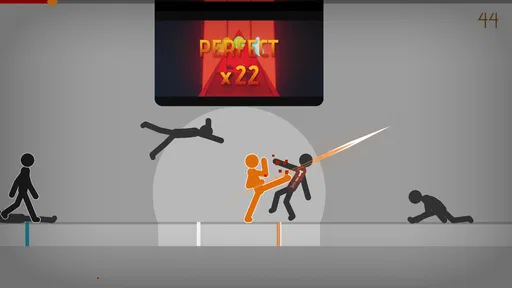

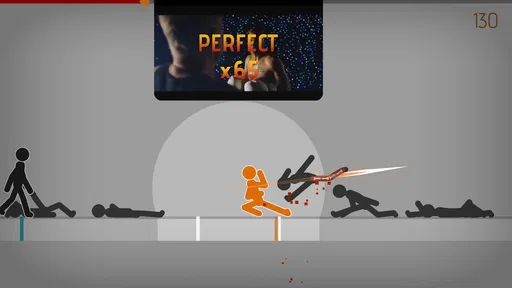
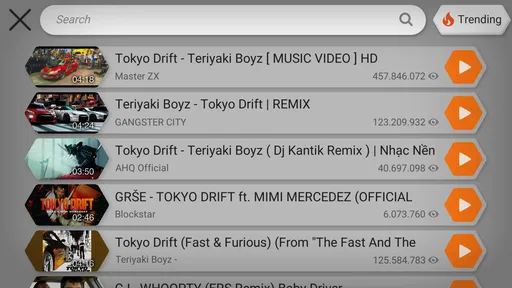
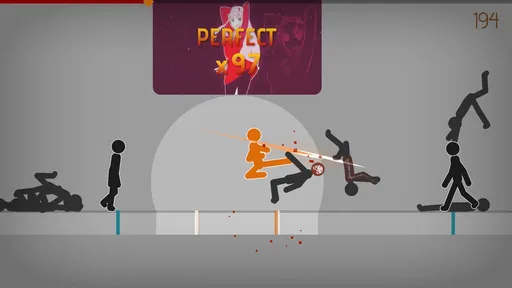
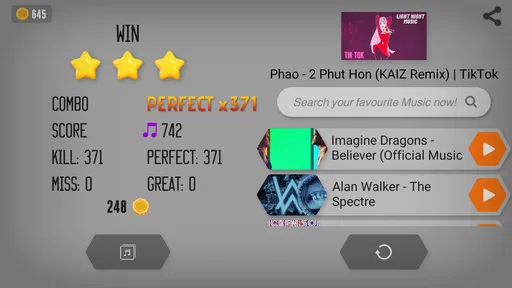
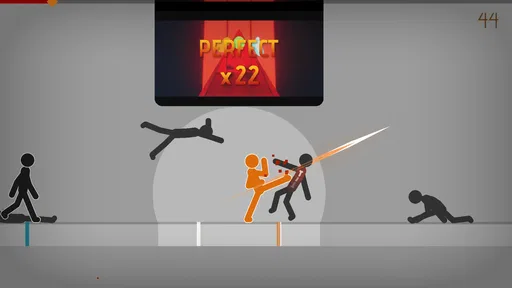

Our Review of Stick Tuber: Punch Fight Dance
 Analysis by Appyee
Stick Tuber: Punch Fight Dance is a music-focused action game from ZEZE Game that puts a stick character into fights where timing matters as much as movement. I found its central idea easy to understand: attacks and enemy encounters are tied to the rhythm, so the game asks me to pay attention to the beat instead of simply tapping through ordinary combat. That combination gives it a more energetic feel than a standard stickman brawler, while still keeping the presentation approachable.
It is free to download, which makes trying it a low-risk decision. The game is marked for Teen players, runs on Android 8.0 or later, and its current version is 3.6. It has also reached more than five million installs, so this is not an obscure experiment with no audience. Still, a 3.2 average from roughly six thousand ratings suggests a mixed experience rather than an automatic recommendation. My impression is that the concept is appealing, but whether it stays enjoyable depends heavily on how much you like rhythm-based repetition and quick combat reactions.
How the rhythm-fighting idea works in practice
The most important thing to understand is that this is not simply a music player with a stickman theme, and it is not a conventional fighting game with background music added afterward. The music is part of the pressure. I have to watch the action, listen for the timing, and react in a way that feels connected to the track. When those elements line up, even a simple encounter can feel satisfying because a successful hit seems to land with the song rather than against it.
That design makes the first few sessions immediately readable. I do not need to learn a complicated fighting-game vocabulary before I can enjoy a round. The visual language is direct, the character is easy to follow, and the musical cue gives me another way to anticipate what is happening. For someone who enjoys casual rhythm games but wants more physical action than note matching, this is a sensible variation.
At the same time, the rhythm focus changes how mistakes feel. In an ordinary stickman action game, I might compensate for a missed attack by tapping faster or relying on repeated movement. Here, poor timing can make the whole exchange feel awkward. The game rewards concentration, and that can be enjoyable during a focused session but less comfortable when I only want something mindless for a few minutes.
Why the music matters more than the stickman art
The stickman presentation keeps the action visually clean. There is less visual clutter than I would expect from a heavily decorated fighting game, which helps me notice enemy movement and the relationship between animation and sound. The simple look is not the main attraction, though. The real identity comes from the way the music gives the fights their pace.
This also means the game is best played with sound available. Without listening carefully, I lose part of the design rather than merely missing background atmosphere. I would not choose it for a quiet waiting room unless I was comfortable treating the visual timing as the main guide. For a commute or a short break, headphones can make the experience more involving, provided the surrounding environment allows it.
A useful habit is to spend the opening moments of a session learning the track’s pulse instead of immediately trying to play aggressively. Once I recognize the rhythm, I make fewer rushed inputs. That small adjustment matters because the game feels less like a test of random reflexes and more like a pattern I can read.
What the free download actually means
The download itself is free, so I can install the game and decide whether its rhythm-combat loop suits me without paying an entry fee. That is the clearest part of its value proposition. It works well for players who want to sample a music game before committing money, especially if they are unsure whether stickman combat will hold their attention.
There are in-app purchases priced at $0.99 per item. I would treat that as an optional spending decision rather than part of the basic cost, because the free access is the starting point. The important distinction is that a free download does not automatically mean unlimited value. If the core play becomes repetitive for me, small purchases would not solve that underlying issue. I would first decide whether the standard loop is enjoyable on its own.
For families, the Teen content rating is worth checking before handing the game to a younger player. The rating places it in a category that may not match every household’s expectations, even if the stickman style looks simple. I would make the decision based on the intended player’s age and comfort with action-oriented combat rather than assuming that cartoon-like visuals make it suitable for everyone.
Where it fits beside other music and action games
Compared with a traditional rhythm game, this title gives me a stronger sense of physical consequence. I am not only following notes or tapping a lane; I am watching a character fight while trying to stay aligned with the music. That can make each successful sequence feel more active. The trade-off is that it may not offer the same precision or musical depth that a dedicated rhythm game provides.
Compared with a standard stickman fighting game, the musical structure gives the encounters a clearer mood and tempo. A conventional brawler may be better for players who want free movement, longer tactical exchanges, or combat that is independent of a song’s timing. Stick Tuber is more appealing when I want the soundtrack to influence my decisions.
It also occupies a different space from a pure music-listening app. The tracks are there to support play, not to replace it. I would not choose this game to discover music or relax passively. Its purpose is interactive: listen, react, hit, recover, and continue with the rhythm. That distinction helps set realistic expectations before installing it.
Practical strengths, friction points, and everyday use
One of the game’s less obvious strengths is how quickly it can create a short session with a defined beginning and end. I can open it during a break, focus on a few encounters, and stop without needing the long-term commitment demanded by a large role-playing game. The music gives those short sessions a sense of momentum, while the simple visual style makes the action easy to pick up again.
That makes it a reasonable companion for a brief commute, a waiting period, or the few minutes before another task. My preferred approach would be to play when I can give the audio and timing some attention, rather than using it while multitasking. The game is casual in presentation, but the rhythm element still benefits from concentration.
The best value comes from treating the music as a gameplay guide, not as decoration. If I focus only on the stickman’s animation and ignore the beat, I make the game harder for myself. Listening first helps me anticipate the pace, avoid frantic tapping, and understand why a sequence succeeded or failed. This is a more useful adjustment than simply playing faster.
Another practical insight is to judge the game by consistency rather than by one exciting round. Rhythm-action games can feel excellent when a track and a fight line up, then less compelling when the pattern starts to feel familiar. I would give it several short sessions before deciding whether the loop has enough variety for me. That approach avoids both extremes: deleting it after one awkward attempt or spending money before knowing whether the basic design will last.
The main friction is that the same simplicity that makes the game approachable can limit its appeal over time. Players who want deep combat systems may find the interactions too narrow. Players who want a broad music library or highly demanding rhythm challenges may also feel that the game sits between genres rather than mastering one of them. Its identity is clear, but its audience is naturally more specific.
The mixed rating reflects why expectations matter. A 3.2 average from about six thousand ratings is not a reason to dismiss the game, but it does warn me that the experience is not universally satisfying. I would interpret that score as a prompt to try the free version carefully, especially if I am sensitive to repetition, timing difficulty, or a limited-feeling combat loop.
Who should install it
I think the strongest match is a player who enjoys both casual stickman action and music-driven games, but does not necessarily need the complexity of a full fighting title. The game is also suitable for someone who likes learning a simple pattern and improving through better timing. Because it is free to access, it is easy to test during a short session without turning the decision into a purchase commitment.
It may also work for players who normally find rhythm games too abstract. Seeing a character respond on screen gives the beat a concrete purpose. Instead of tapping because a symbol reached a line, I am reacting because the action on screen demands it. That extra layer can make the genre more approachable for people who prefer visible movement and immediate feedback.
I would skip it if my priority is deep competitive combat, extensive character development, or a large strategic system. I would also look elsewhere if I mainly want uninterrupted music, because this game requires active participation. Someone who dislikes repeating patterns may run into the same limitation quickly, particularly if the novelty of combining fights and rhythm wears off.
Parents should also consider the Teen rating before recommending it to children. The stickman style may appear light, but the game is still built around fighting. That does not make it unsuitable for every teenager, but it does mean the age label should be part of the decision rather than ignored.
How to decide whether optional spending is worthwhile
I would not make an in-app purchase immediately. Since each listed item costs $0.99, the individual price is small, but repeated small purchases can still change the real cost of a free game. First, I would confirm that I enjoy the basic rhythm-fight cycle, that I am comfortable with the Teen rating, and that I expect to return to the game more than once.
The sensible workflow is to play without spending, notice what specifically feels limited, and then decide whether an item addresses that limitation. If I am bored by the core rhythm or prefer a more complex fighter, purchasing something will not make this the right game for me. If I already enjoy the sessions and want a modest optional enhancement, the low per-item price may feel reasonable.
This is also where the game compares favorably with paid alternatives in one narrow sense: I can sample its central idea first. A paid rhythm-action title may deliver more polish or depth, but it asks for commitment earlier. Stick Tuber gives me a chance to discover whether its particular blend works for my taste before I consider any optional spending.
Device expectations and version context
The minimum requirement of Android 8.0 or later makes the game accessible to a broad range of Android devices. I would still keep expectations realistic: compatibility does not guarantee that every phone will feel equally comfortable for rhythm play. Timing-based controls are more enjoyable when the device responds consistently, so I would avoid judging the design after playing with distracting interruptions or a poor audio setup.
The current version is 3.6, which is useful context when comparing impressions from different periods. I would make sure the installed copy is current before deciding that an issue reflects the present experience. More importantly, I would evaluate the game on its actual rhythm and combat loop rather than expecting a version number to promise a particular level of depth.
My final recommendation
After weighing the free access, the music-centered combat, and the mixed reception, I see Stick Tuber: Punch Fight Dance as a worthwhile try rather than a universal must-have. Its strongest quality is the direct connection between listening and fighting. When I am in the mood for a quick, energetic game that asks me to react to a beat, the concept has genuine charm.
Its limitations are just as clear. The game is unlikely to satisfy someone seeking a deep fighter, a serious rhythm challenge, or a passive music experience. The Teen rating also makes it a decision that should be made with the intended player in mind. Optional purchases at $0.99 per item are easy to understand, but I would only consider them after the free experience has already proved enjoyable.
My advice is simple: install it if you like the idea of combining stickman battles with rhythm and want a free way to test that blend. Give the timing a fair chance, play with sound when possible, and judge the repeat value after several short sessions. Skip it if you already know that repetitive timing games or lightweight combat will frustrate you. For the right player, Stick Tuber: Punch Fight Dance is a lively genre mash-up; for everyone else, the free download makes discovering that mismatch painless.
ZEZE Game has created a game with a recognizable hook rather than another anonymous action title. That hook is enough to earn a recommendation for curious music-game fans, but not enough for me to overlook the trade-offs. I would call it a cautious recommendation: easy to try, pleasant when the rhythm clicks, and best approached with modest expectations about depth and long-term variety.
Verdict
Strengths of Stick Tuber: Punch Fight Dance
- Simple controls make it easy to start playing immediately.
- Short levels are convenient for quick gaming sessions.
- Colorful stick-figure animations give the game a playful style.
- Offline play is useful when you have no internet connection.
- Progressive challenges help keep the gameplay engaging.
Limitations of Stick Tuber: Punch Fight Dance
- Ads may interrupt gameplay, especially between completed levels.
- Repetitive fights can reduce long-term variety for some players.
- Limited character customization may disappoint personalization fans.
- Some levels rely more on timing than strategic depth.
- Performance may vary on older or less powerful devices.
Similar Picks in This Category
View All
Tiles Hop Music & Ball Game
AMANOTES PTE. LTD.4.3

Magic Tiles 3™ - Piano Game
AMANOTES PTE. LTD.4.6

Real Piano
Bilkon3.7

Piano Game: Classic Music Song
Dream Tiles Piano Game Studio4.0

Smash Colors: Music Ball Rush
BADSNOWBALL HONGKONG LIMITED4.2

Piano Music Go-EDM Piano Games
Joy Journey Music Games4.5
Frequently Asked Questions
What is Stick Tuber: Punch Fight Dance?
Stick Tuber: Punch Fight Dance is a casual action game that combines stickman combat with rhythm-focused movement and dance-style challenges. You guide a character through levels where timing, quick reactions, and well-placed punches are important. The presentation is simple and colorful, making it easy to understand, while the short stages are designed for quick play sessions on Android and iOS devices.
How do you play Stick Tuber: Punch Fight Dance?
The game is built around simple touch controls, so it is approachable even if you do not regularly play action games. During each stage, you generally need to follow on-screen prompts, move at the right moment, and attack opponents or obstacles with accurate timing. Success depends more on reaction speed and learning the rhythm of each encounter than on complicated controls or long tutorials.
Is Stick Tuber: Punch Fight Dance free to download?
Stick Tuber: Punch Fight Dance can generally be downloaded without an upfront purchase, although the exact availability and pricing may vary depending on your platform and region. Like many free mobile games, it may include advertising, optional in-app purchases, or both. Before installing, check the Google Play Store or Apple App Store listing for current details about purchases, permissions, and supported devices.
Can Stick Tuber: Punch Fight Dance be played offline?
Some parts of Stick Tuber: Punch Fight Dance may work without a constant internet connection, particularly the basic gameplay and previously loaded levels. However, advertisements, rewards, updates, cloud features, or other online elements may require access to the internet. If offline play is important to you, test the game after disabling Wi-Fi and mobile data, since offline functionality can change with updates.
Is Stick Tuber: Punch Fight Dance suitable for children?
The game uses cartoon-style stick characters and exaggerated action rather than realistic violence, which may make it suitable for a broad audience. Nevertheless, parents should review the age rating, advertising content, and available in-app purchases before allowing children to play. It is also worth checking device settings for purchase restrictions, screen-time limits, and privacy controls, especially on shared family devices.
Play our best games!


